
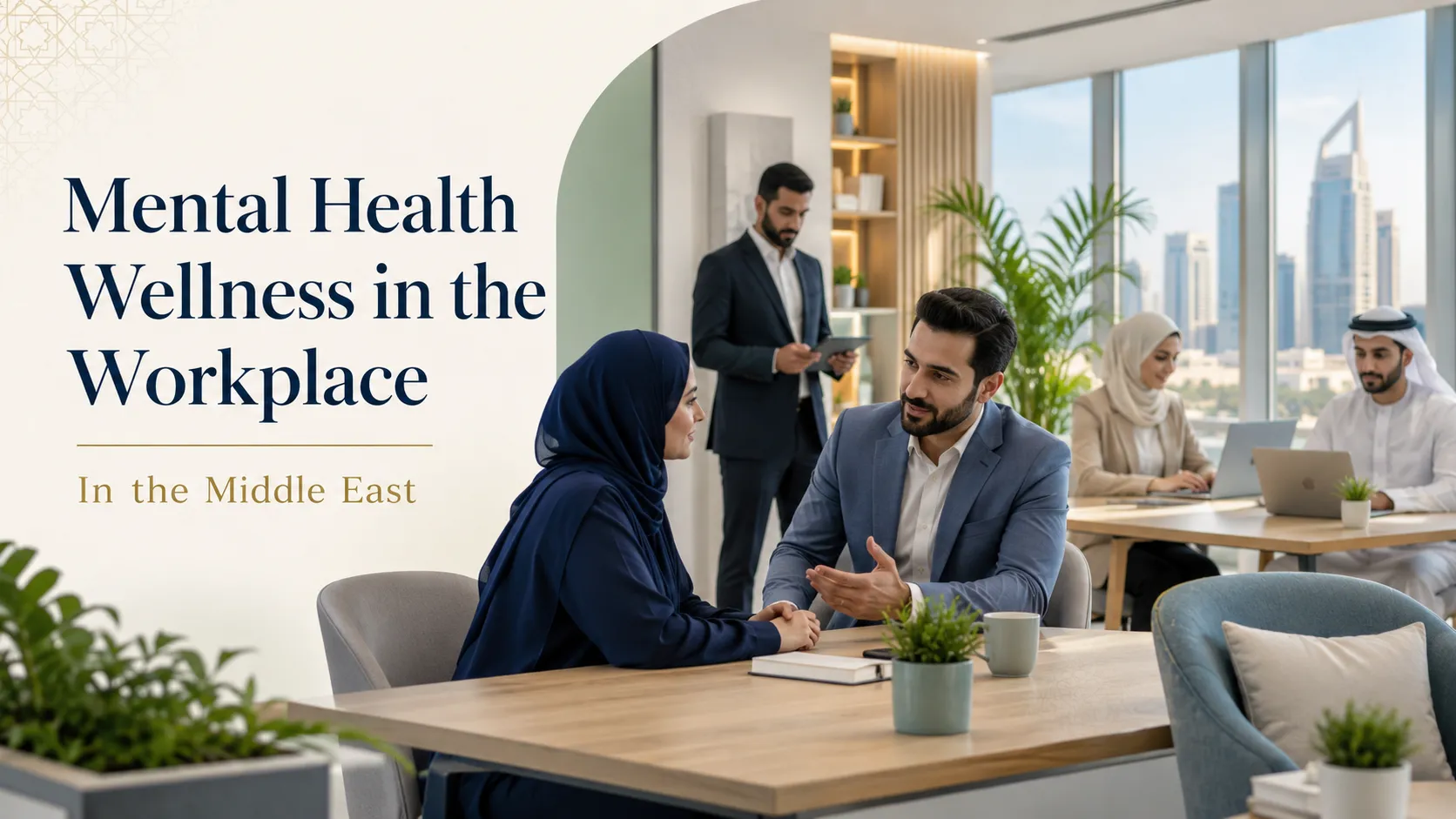
Mental Health Wellness in the Workplace in the Middle East: Why Companies Can No Longer Ignore Employee Wellbeing
May 8, 2026
Mental health wellness in the workplace is becoming one of the most important business priorities across the Middle East. For many years, workplace wellbeing was treated as a nice extra, something companies discussed during awareness days, but rarely built into daily operations. Today, that approach is no longer enough.
Across the UAE, Saudi Arabia, Qatar, Kuwait, Bahrain, Oman, Lebanon, Jordan, Egypt, and the wider GCC and MENA region, employees are facing increasing pressure from long working hours, economic uncertainty, competitive job markets, digital overload, family responsibilities, and rapid workplace transformation. At the same time, employers are realizing that poor mental health does not stay outside the office. It directly affects productivity, performance, retention, creativity, absenteeism, leadership quality, and company culture.
Workplace mental health is not only about helping employees who are already struggling. It is about creating a work environment where people can focus, communicate, recover from stress, feel psychologically safe, and perform at their best without burning out.
What Is Mental Health Wellness in the Workplace?
Mental health wellness in the workplace refers to the policies, culture, support systems, and daily management practices that protect and improve employees’ emotional and psychological wellbeing.
It includes issues such as workplace stress management, employee burnout prevention, anxiety at work, work life balance, psychological safety, emotional resilience, healthy communication, leadership support, employee assistance programs, and mental health training for managers.
In simple terms, a mentally healthy workplace is one where employees are not expected to sacrifice their wellbeing in order to succeed.
This does not mean that work should be free from pressure. Every serious organization has deadlines, targets, responsibilities, and challenges. The real question is whether employees are supported in handling that pressure in a healthy and sustainable way.
Why Workplace Mental Health Matters in the Middle East
The Middle East has a unique workplace culture. Many businesses are family owned, hierarchical, fast moving, and relationship driven. In the GCC, workplaces are often multicultural, with employees from many nationalities, languages, and cultural backgrounds working together. In countries facing economic instability, employees may also carry financial stress, job insecurity, and family pressure into the workplace.
This creates a specific set of mental wellness challenges.
In some organizations, employees may avoid speaking about stress, anxiety, or burnout because they fear being judged as weak, unprofessional, or incapable. In others, managers may not be trained to recognize early signs of emotional strain. Employees may continue working while exhausted, disengaged, or overwhelmed, because they feel they have no safe space to ask for support.
This is why mental health awareness in Middle Eastern workplaces must be culturally sensitive. It should not simply copy Western wellbeing programs. It must understand local values such as family, privacy, respect, dignity, faith, community, reputation, and hierarchy.
A strong workplace wellness program in the Middle East should protect confidentiality, avoid stigma, respect cultural norms, and present mental wellbeing as a performance and health priority, not as a weakness.
Common Mental Health Challenges Employees Face at Work
One of the most searched topics related to workplace mental health is how to manage stress at work. Stress is normal, but chronic stress becomes dangerous when employees feel constantly pressured without enough recovery, control, or support.
Common workplace mental health challenges include:
Burnout: This happens when employees are emotionally exhausted, mentally drained, and disconnected from their work. Burnout is common in high pressure industries such as healthcare, finance, tech, education, sales, hospitality, construction, and corporate management.
Anxiety at work: Employees may experience constant worry about performance, deadlines, job security, mistakes, difficult managers, client pressure, or conflict with colleagues.
Work life imbalance: In many Middle Eastern workplaces, especially among ambitious professionals and managers, long hours are often normalized. Employees may feel expected to be available after work, during weekends, or even while on leave.
Toxic workplace culture: A culture of fear, blame, micromanagement, gossip, disrespect, favoritism, or unclear expectations can seriously damage employee wellbeing.
Poor communication: When employees do not understand priorities, expectations, or feedback, stress increases. Confusion creates anxiety.
Lack of psychological safety: If employees fear speaking honestly, asking questions, reporting problems, or admitting mistakes, the workplace becomes emotionally unsafe.
Manager related stress: Many employees do not leave companies. They leave managers. A manager’s communication style, fairness, emotional intelligence, and pressure handling ability can strongly affect mental health at work.
Signs of Poor Mental Health in the Workplace
Employers and HR teams should learn to recognize early warning signs before problems become crises. Poor mental health may not always appear as visible sadness or panic. In the workplace, it often shows up as performance and behavior changes.
Signs may include reduced productivity, frequent absences, irritability, withdrawal from colleagues, loss of motivation, missed deadlines, difficulty concentrating, emotional reactions, increased mistakes, physical complaints, and sudden disengagement.
For leaders, the important point is not to diagnose employees. Managers are not therapists. Their role is to notice changes, open respectful conversations, reduce unnecessary pressure where possible, and guide employees toward appropriate support.
A simple sentence such as, “I noticed you seem under a lot of pressure recently. Is there anything at work we can adjust or support you with?” can be powerful when said with genuine care and confidentiality.
The Business Case for Employee Mental Wellness
Some business owners still see mental health programs as an expense. In reality, workplace mental wellness is directly connected to business performance.
When employees are mentally well, they are more focused, more creative, more loyal, and more productive. They communicate better, solve problems faster, serve customers more effectively, and make fewer avoidable mistakes.
When employees are mentally exhausted, the opposite happens. Absenteeism increases. Presenteeism becomes common, where people are physically at work but mentally disengaged. Turnover rises. Team conflicts increase. Customer service suffers. Managers spend more time dealing with problems that could have been prevented.
For companies in the Middle East competing for talent, employee wellbeing is also becoming part of employer branding. Skilled professionals increasingly look for companies that respect work life balance, offer mental health support, and create a positive workplace culture.
A company that invests in employee wellbeing is not being soft. It is protecting its people, its performance, and its reputation.
How to Improve Mental Health Wellness in the Workplace
A serious workplace mental health strategy should go beyond motivational posters and one time seminars. It needs practical, consistent action.
1. Train Managers to Support Mental Wellbeing
Managers have the greatest daily influence on employee mental health. A company can have excellent HR policies, but if line managers communicate aggressively, overload teams, ignore warning signs, or create fear, employees will suffer.
Mental health training for managers should include emotional intelligence, stress awareness, active listening, conflict management, feedback skills, psychological safety, and how to refer employees to professional help when needed.
Managers do not need to become counselors. But they do need to become better human leaders.
2. Build a Culture of Psychological Safety
Psychological safety at work means employees feel safe to speak up, ask questions, share concerns, and admit mistakes without fear of humiliation or punishment.
This is especially important in hierarchical organizations, where employees may hesitate to challenge decisions or report problems. When people stay silent, small issues become major risks.
Leaders can build psychological safety by listening without interrupting, avoiding public blame, encouraging questions, thanking employees for raising concerns, and separating mistakes from personal attacks.
3. Address Burnout Before It Becomes Normal
Burnout prevention in the workplace requires honest workload management. Many organizations talk about wellbeing while still rewarding overwork. This creates a contradiction employees can easily see.
To prevent burnout, companies should review workloads, deadlines, staffing levels, meeting culture, after hours communication, and unrealistic expectations. Leaders should ask whether high performance is being achieved through healthy systems or through silent exhaustion.
Burnout is not only an individual problem. It is often a system problem.
4. Offer Confidential Employee Support
Employee assistance programs, mental health counseling, coaching, or wellbeing hotlines can be valuable when confidentiality is guaranteed. In the Middle East, privacy is extremely important because employees may fear stigma or career consequences.
Companies should clearly communicate that mental health support is confidential, professional, and separate from performance evaluation.
For smaller companies that cannot afford a full employee assistance program, even access to external counselors, wellness workshops, stress management sessions, or trusted referral partners can be a strong starting point.
5. Promote Healthy Work Life Balance
Work life balance in the Middle East can be challenging because many employees feel pressure to always be available. Technology has blurred the line between work and home. WhatsApp messages, emails, and urgent requests can continue late into the evening.
Companies should create clear expectations around after hours communication. Not every message is urgent. Not every employee needs to be available 24/7.
Flexible working arrangements, realistic leave policies, protected break times, and respect for family responsibilities can significantly improve employee wellbeing.
6. Create Mental Health Awareness Without Stigma
Mental health awareness in the workplace should be practical, respectful, and culturally appropriate. Some employees may not be comfortable with direct emotional language, so the topic can be introduced through stress management, resilience, focus, communication, productivity, and healthy leadership.
This makes mental wellbeing easier to discuss without shame.
Awareness campaigns can include workshops on managing stress at work, recognizing burnout, improving sleep and focus, emotional resilience, healthy communication, and supporting colleagues respectfully.
The Role of HR in Workplace Mental Wellness
HR departments in the Middle East have an important role in moving mental wellness from theory to practice. HR should not only respond to crises. It should help design systems that reduce unnecessary psychological pressure.
This includes onboarding practices, manager training, employee surveys, confidential reporting channels, fair policies, anti bullying procedures, workload reviews, wellbeing workshops, and clear escalation paths.
HR should also measure workplace wellbeing. Anonymous surveys can help identify stress levels, burnout risk, leadership issues, workload problems, and culture gaps. The goal is not to collect data for appearance. The goal is to act on what employees are saying.
Mental Health Wellness for Remote and Hybrid Teams
Remote and hybrid work are growing across the Middle East, especially in tech, marketing, consulting, education, and professional services. While flexible work can improve wellbeing, it can also create isolation, blurred boundaries, and communication stress.
Remote employees may feel invisible, disconnected, or pressured to prove they are working. Hybrid teams may experience unfairness if office based and remote employees are treated differently.
Companies should create clear communication rules, regular check ins, fair performance measures, and opportunities for team connection. Mental wellness for remote workers should include boundaries around availability, camera fatigue, digital overload, and loneliness.
Leadership and Mental Health: The Missing Link
Workplace mental health begins at the top. Employees watch what leaders tolerate, reward, and model.
If leaders talk about wellbeing but praise people who never rest, the real message is clear. If leaders encourage openness but punish honest feedback, employees will stay silent. If leaders say people matter but ignore toxic managers, trust disappears.
Healthy leadership means setting priorities clearly, communicating respectfully, making fair decisions, managing pressure responsibly, and treating employees as human beings, not machines.
In the Middle East, where leadership authority is often deeply respected, senior leaders have a powerful opportunity to reduce stigma. When leaders openly support mental wellness, employees are more likely to take the topic seriously.
Conclusion: The Future of Workplace Wellbeing in the Middle East
Mental health wellness in the workplace is no longer optional. It is becoming a core part of successful business strategy in the Middle East.
Companies that ignore employee wellbeing may still operate, but they will struggle with burnout, turnover, disengagement, poor communication, and reduced performance. Companies that take mental wellness seriously will build stronger teams, healthier cultures, better leadership, and more sustainable growth.
The future of work in the Middle East will not be defined only by technology, expansion, or profit. It will also be defined by how well organizations protect the minds, energy, dignity, and emotional wellbeing of their people.
A mentally healthy workplace is not created in one workshop. It is created through daily leadership, clear systems, respectful communication, confidential support, and a genuine commitment to helping employees succeed without losing themselves in the process.